The Quiet Science Behind a Perfect Pale Lavender Filament

There is something instantly calming about a well-made pale lavender brush. The color reads as soft, elegant, and understated. But what most people never see is how much science sits behind that quiet appearance.
Why PBT Matters
PBT (polybutylene terephthalate) has become the workhorse of premium brush filaments because it does not compromise on the things that matter. It absorbs almost no water — roughly 0.1% of its weight — so it performs identically wet or dry, dries quickly, and resists bacterial growth. Its crystalline structure gives it strong bend recovery, so filaments spring back after being pressed and keep their shape through thousands of uses. The trade-off? That same dense structure makes PBT notoriously difficult to dye well.
The Pale Lavender Challenge
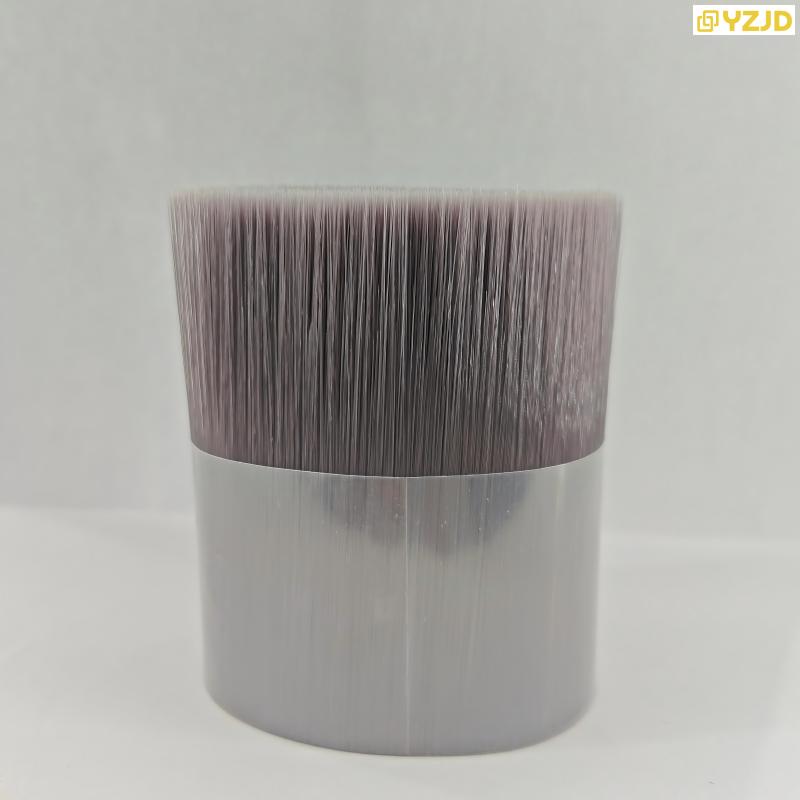
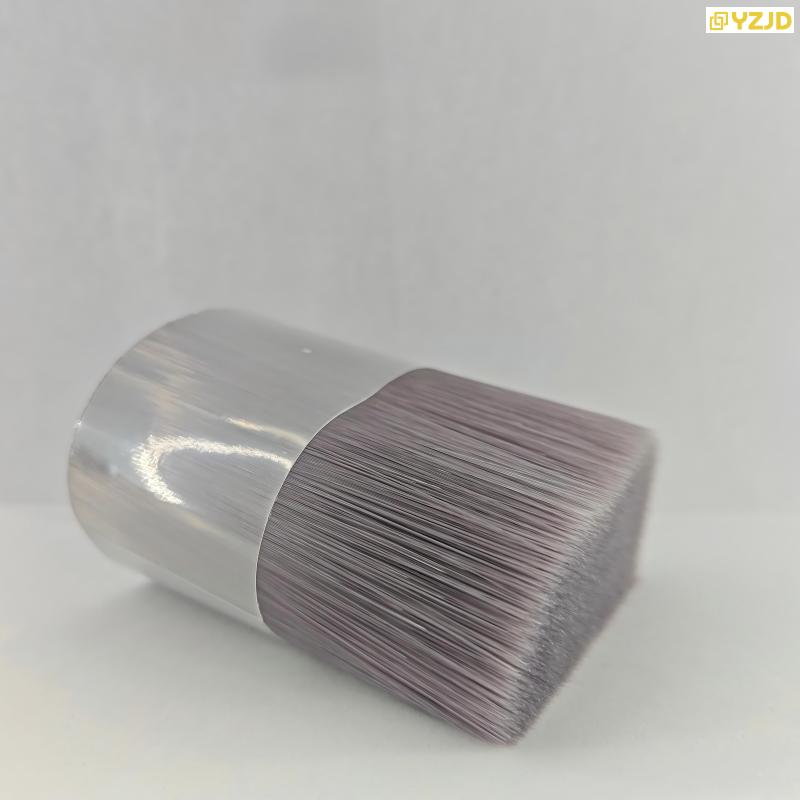
Pale lavender is not one dye — it is a precise balance of red and blue, and the two colors behave very differently under heat. Red absorbs faster. Blue holds tighter. Shift the bath temperature by a couple of degrees, and the batch drifts — slightly pink, slightly blue, slightly gray. On a dark plum, you might never notice. On a pale lavender, every shift is visible immediately. This is why light-colored filaments demand tighter process control, using high-temperature, high-pressure dyeing with disperse dyes that penetrate the crystalline structure. The color is not sitting on the surface — it is locked inside the fiber.
What "No Bleeding" Actually Means
Color fastness is often treated as a checkbox, but for a pale lavender filament it is the difference between a product that ships and one that comes back. A properly dyed PBT filament can sit in hot water, be scrubbed with a white cloth, and be exposed to synthetic perspiration without transferring any color. Cut a fiber open, and the purple runs from edge to center with no white core, no gradient. Surface-dyed alternatives look identical on arrival — and fail three weeks later, when the tips wear thin or the first wash turns the water faintly purple.
The Uniformity You Can See and Feel
Finally, there is the property that separates a good filament from a great one: consistency. Diameter held to ±0.01 mm. Length cut to a tight tolerance. Every fiber straight, every bundle aligned. On a pale lavender filament, this uniformity is visual as well as technical — thicker fibers catch the light differently, thinner ones fall into shadow, and inconsistent diameter creates a streaky brush face no matter how carefully it is tufted.
A pale lavender PBT filament that is colorfast, uniformly dyed, and precisely consistent is not the cheapest option. But for a brand that cares about the details its customers will never consciously notice — and will always feel — it is often the one worth paying for.