Why Do Some Brushes Smell After One Wash, While Others Stay Fresh?

You use a brush a few times, wash it, leave it to dry, and pick it up again — only to be hit by an "off" smell, like a damp rag. Meanwhile, some brushes you use for months and they never develop any odor at all. The difference isn't in how you wash them. It's in the filaments themselves.
Why Do Brushes Smell?
The root cause is bacterial growth. When filaments pick up powder, sebum, and moisture, and if they dry slowly, bacteria multiply and produce odor. Natural bristle brushes are especially prone to this — bristles are protein fibers, essentially a "food source" for bacteria; their scaly surfaces and internal cavities trap dirt, and the more you wash them, the wetter and smellier they get.
Why Synthetic Filaments Are More Hygienic?
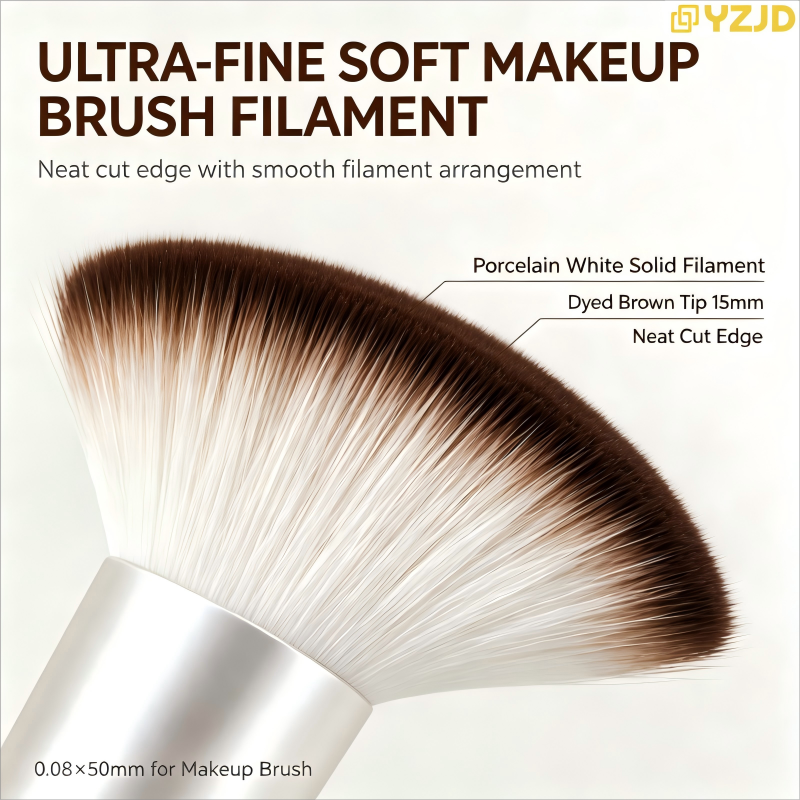
PBT synthetic filaments solve this at a fundamental level: they are not protein-based, so bacteria cannot feed on them. They absorb only about 0.1% of their weight in water, so moisture sits only on the surface and evaporates quickly. And their smooth surface means powder and sebum rinse away easily.
Don't Hollow Cores and Four-Corner Shapes Trap Dirt?
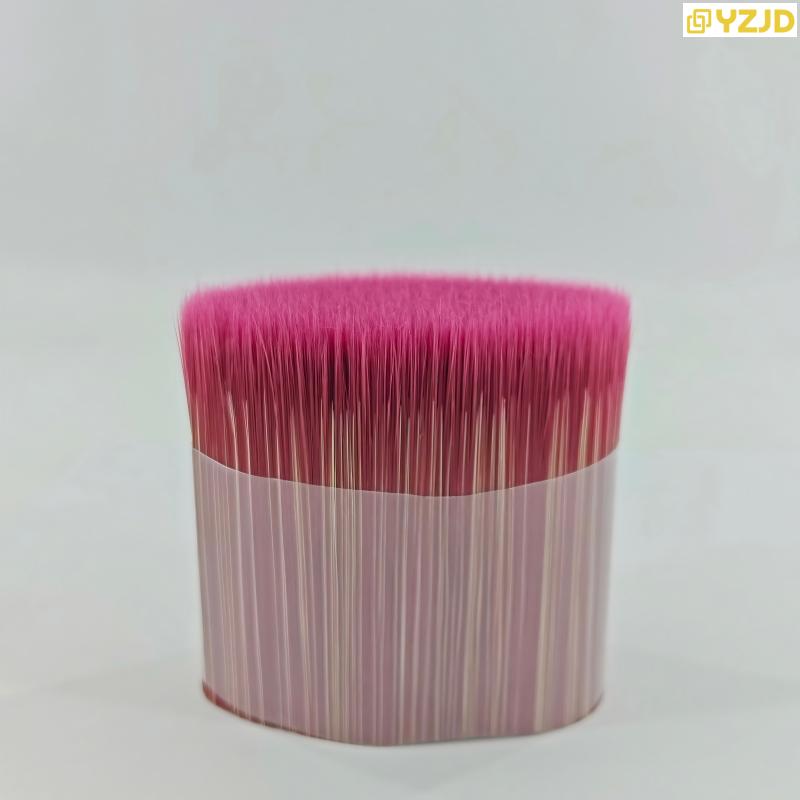
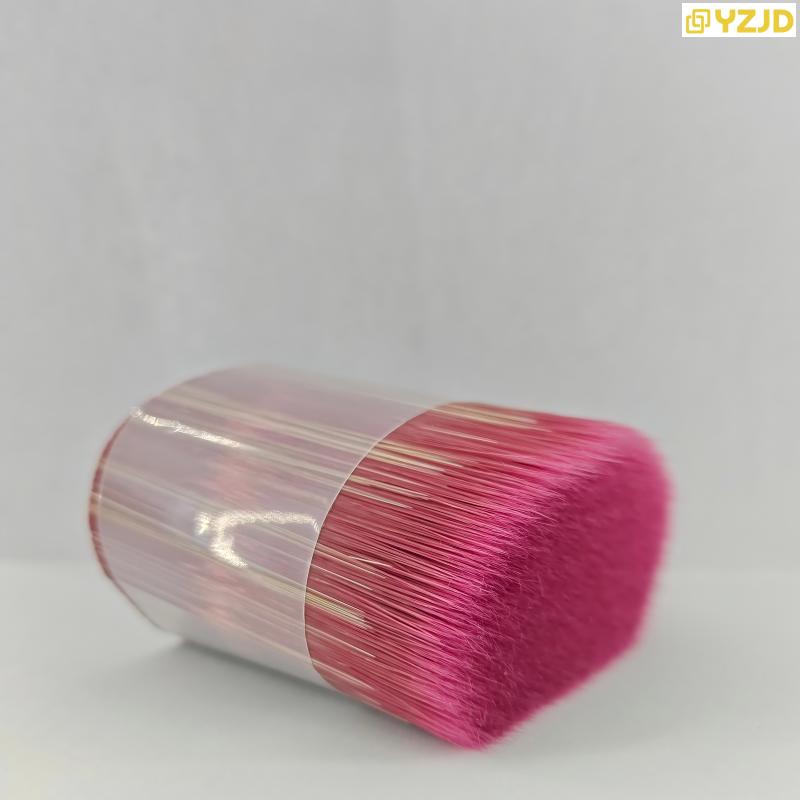
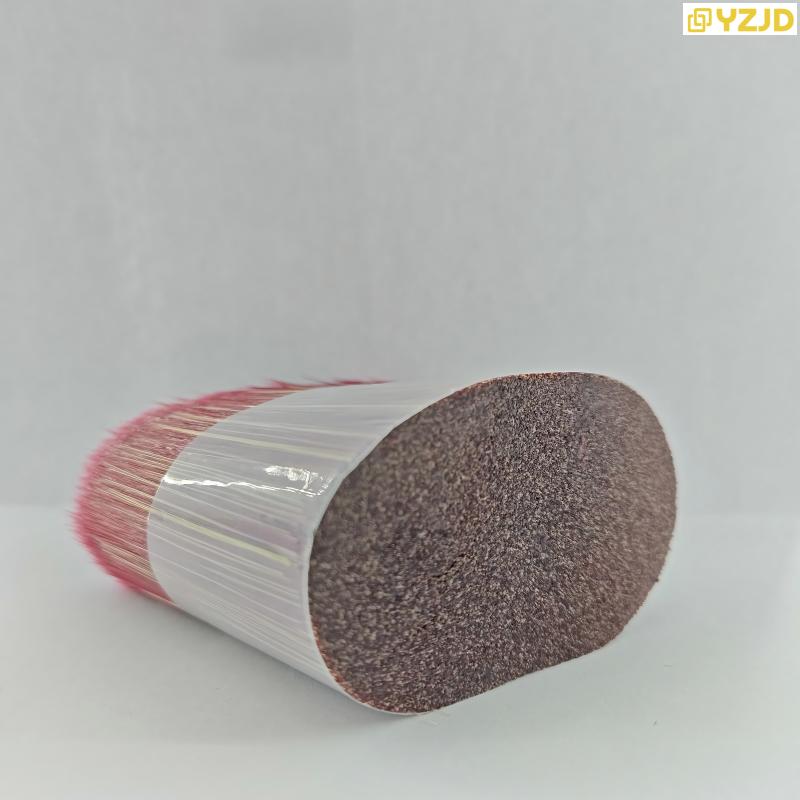
Actually, the opposite is true. The cavity in a micro-hollow filament is only a few microns in diameter — smaller than powder particles — so powder literally cannot get inside. If anything, the micro-hollow structure increases gaps between fibers, making the entire tuft more breathable and faster-drying. The four edges of a quadrilateral filament act as "flow channels" during cleaning, guiding water along the fiber to carry away residue; the four-corner cross-section also creates larger gaps between fibers, so cleaning is more thorough.
The Bottom Line
The PBT base eliminates bacterial growth at the source, the micro-hollow structure improves breathability and speeds up drying, and the four-corner design makes cleaning more thorough. Together, they produce a brush that resists odor, dries fast, and is easy to clean. Most people choose a brush based only on softness or powder pickup — rarely do they think about whether it will smell. But a brush that smells bad is one you will stop using after a few tries. A brush that stays fresh is one you will reach for again and again. Next time you find a brush that "never smells no matter how much you use it," take a closer look at its filaments. Chances are, it has already won at the structural level.